Contactor Basics: Working Principle, Types & Key Applications
Introduction
Contactors are indispensable in modern electrical control systems, offering safe and reliable switching of high‑power circuits with minimal human intervention. Whether you’re an electrical engineer designing industrial machinery or a technician maintaining building automation, understanding contactors ensures optimal performance, enhanced safety, and reduced downtime.
1. How Contactors Operate
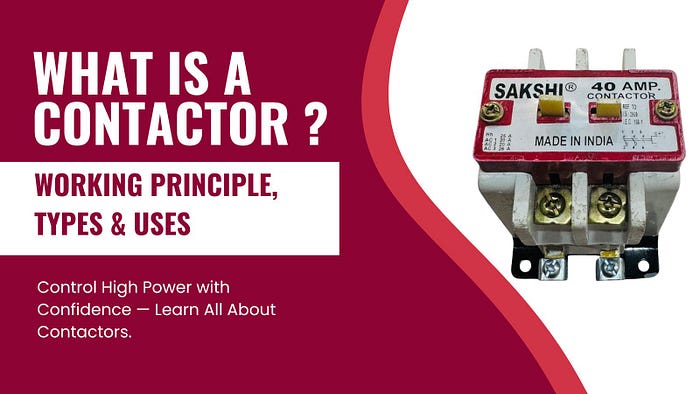
At their core, contactors use an electromagnetic coil to open and close a set of conductive contacts. When voltage energizes the coil, it generates a magnetic field that pulls the movable contact into the stationary contact, completing the circuit. De‑energizing the coil breaks the magnetic field, allowing a spring to return the movable contact to its open state. This simple electro‑mechanical action enables rapid switching of heavy loads without arc damage to control panels.
2. Main Types of Contactors
AC Contactors
- Designed for alternating current applications
- Features shading coils or rings to prevent contact chatter at zero crossing
DC Contactors
- Built for direct current circuits
- Often include magnetic blow‑outs or arc chutes to extinguish arcs
Vacuum Contactors
- Encapsulate contacts in vacuum interrupters for ultra‑low arcing
- Ideal for high‑voltage and high‑frequency switching
Solid‑State Contactors (SSCs)
- Use semiconductor devices (thyristors/triacs) instead of moving parts
- Offer silent operation and superior longevity but require heatsinking
3. Key Applications
- Motor Control: Starting, stopping, and reversing three‑phase motors in conveyor belts, pumps, and HVAC systems.
- Lighting Systems: Centralized switching of large lighting banks in warehouses, stadiums, and office complexes.
- Power Distribution: Integrating with soft starters, variable frequency drives (VFDs), and automation PLCs in manufacturing lines.
- Safety Interlocks: Emergency shutdowns in hazardous areas — oil & gas, chemical plants, and mining operations.
4. Selection Criteria
- Load Current & Voltage Rating: Ensure contacts and coil match your system’s peak and continuous demands.
- Mechanical & Electrical Endurance: Look for high cycle ratings for frequent switching duties.
- Auxiliary Contacts: Additional NO/NC contacts for signaling or interlocking in PLC circuits.
- Ambient Conditions: Consider IP ratings, temperature range, and vibration resistance for harsh environments.
Conclusion
Mastering contactor technology empowers you to design safer, more efficient electrical installations. Ready to enhance your control systems? Explore our full range of industrial contactors, get expert guidance, and request a free consultation today!
Read more to visit — https://www.dhirajelectricalindia.com/2025/06/14/what-is-a-contactor-working-types-uses/


Comments
Post a Comment